Why does a boom lift require a harness? The answer begins with movement, height, and human balance. A boom lift can swing, stop suddenly, or shift when positioned on uneven ground. Even experienced operators can be thrown from the platform within seconds. A harness, connected to a suitable lanyard and approved anchor point, helps keep the worker inside the basket during an unexpected movement.
Peter Douglas, Chief Executive of the International Powered Access Federation, has stated, “Nobody should be killed or seriously injured while working at height.” His words reflect the central purpose of fall protection. It is not an optional accessory or a replacement for careful operation. It is one layer within a broader safety system, including equipment inspection, ground assessment, weather checks, proper training, and controlled driving.
The platform may feel stable.
That feeling can be misleading.
A sudden gust, a trapped wheel, or contact with another structure can change the situation instantly. I have seen safety discussions focus heavily on the machine while overlooking the person standing inside it. That is an uncomfortable weakness. The harness matters because it addresses the worker’s position, not merely the lift’s condition. However, wearing one incorrectly can create false confidence. The connection must be compatible, adjusted correctly, and used according to the manufacturer’s instructions. This introduction examines the practical reasons behind harness use, common mistakes, and the habits that make boom lift work safer in real conditions.
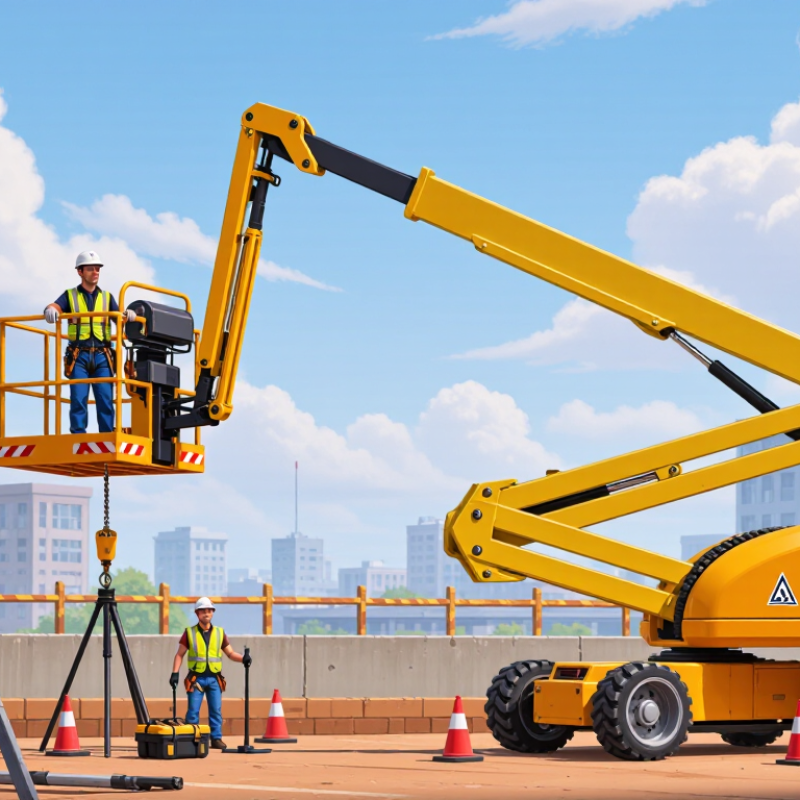
A boom lift is a mobile aerial work platform designed to raise workers and tools. It uses a hydraulic boom to move a basket upward, outward, or around obstacles. Some models use a telescopic arm, while others use an articulated arm with several joints. The operator controls movement from the basket or the ground. Steering, lifting, and rotation depend on hydraulic systems, electrical controls, and a stable base.
The basket may reach above roofs, steel frames, signs, or tree branches. However, height creates serious fall risks. Sudden braking, uneven ground, wind, or contact with another structure can throw a worker against the guardrails or out of the basket. A properly fitted harness, connected to the approved anchor point, helps reduce this risk. It is not a substitute for the guardrails, safe operation, or worker training.
Before operation, an experienced worker should inspect the boom, controls, tires, emergency stop, anchor point, and guardrails.
Check the surface for holes, slopes, and soft soil. Keep the gate closed, maintain three points of contact, and avoid climbing on the rails. Never attach a lanyard to a guardrail unless the equipment instructions specifically allow it. That detail is easy to overlook. It should not be. Even a short lift can move sharply when the boom changes direction, so the operator and worker must discuss signals, clearance, and emergency procedures before leaving the ground.
Why Does a Boom Lift Require a Harness?
Workers can fall from an elevated boom lift when the platform moves suddenly, tilts, or stops against an obstacle. A worker may also overreach, climb the guardrails, or stand on the mid-rail for extra height. Strong wind can shift the basket and disturb balance. Uneven ground creates another hidden hazard. A harness with a properly connected lanyard helps keep the worker inside the platform during a fall or ejection. It does not make unsafe behavior acceptable. The U.S. Bureau of Labor Statistics recorded 395 construction deaths from falls to a lower level in 2022. IPAF’s Global Safety Report 2024 recorded 118 MEWP-related fatalities in 2023. These figures show why fall protection deserves constant attention.
A boom lift harness must connect to the approved anchorage point inside the platform. The lanyard should be short enough to reduce fall distance and prevent contact with lower surfaces. Workers need training, equipment inspection, and a rescue plan before lifting begins. A damaged webbing strap, loose gate, or poorly adjusted harness can fail at the worst moment. I once treated harness use as simple attachment. That assumption was incomplete. The anchor, lift condition, worker position, and rescue response all matter.
Tips: Inspect the harness before every shift. Keep both feet on the platform floor. Never climb the rails. Check wind conditions and ground stability. Follow the lift’s instructions and site procedures.
A boom lift can throw or eject a worker when the platform moves suddenly, the machine tips, or the worker climbs or leans outside the guardrails. OSHA requires workers in aerial lifts to use a personal fall arrest system attached to the designated anchor point. The comparison below shows common OSHA fall-protection trigger heights; a boom lift is different because its fall-arrest requirement is tied to the aerial-lift hazard, not simply to a minimum working height.
Sources: OSHA 29 CFR 1926.453(b)(2)(v), 29 CFR 1926.501(b)(1), 29 CFR 1910.28(b)(1).
A boom lift can move suddenly, especially when its platform catches wind or contacts a structure. A worker without a harness may be thrown through the open entrance. NIOSH FACE investigations recorded 87 fatal aerial-lift incidents between 2011 and 2014, involving 91 worker deaths. Falls and ejections remain serious concerns. OSHA requires personal fall protection for workers in boom-supported platforms under 29 CFR 1926.453. The harness connects the worker to an approved anchor point. A properly adjusted lanyard helps keep the body inside the platform during sudden movement.
The protection depends on correct use. Before climbing aboard, inspect the webbing, stitching, buckles, shock absorber, and connector. Look for cuts, burns, chemical damage, or stretched fibers. Keep the gate closed. Attach only to the designated platform anchorage, never to a rail or nearby structure. A short restraint system can reduce the chance of reaching an ejection point. A fall-arrest system may stop a fall, but it cannot prevent every injury. The platform still needs stable ground, suitable weather conditions, and trained operation. OSHA emphasizes pre-use inspections and worker training for aerial lifts. In practice, workers sometimes wear a harness loosely or clip it incorrectly. That small shortcut can defeat the system. Even experienced operators should pause when the lift feels unstable. Mistakes are easy to make at height.
A boom lift can move suddenly, especially on uneven ground or during braking. A harness helps prevent an operator from being thrown over the platform guardrails. It does not replace those guardrails. OSHA requires approved personal fall protection for boom-supported aerial lifts, including a body harness and suitable lanyard under applicable rules (29 CFR 1910.67; 29 CFR 1926.453).
Use the harness whenever the boom lift’s risk assessment requires fall restraint or fall arrest. Before entering the platform, inspect webbing, stitching, buckles, hooks, and the energy absorber. Look closely at cut fibers and heat damage. They are easy to miss. Connect the lanyard only to the designated anchor point, never to a mid-rail or gate. Keep it short enough to reduce ejection risk, but follow the equipment manual and site procedure. A loose harness can shift during a sudden stop. An overlong lanyard can create dangerous swing-fall distance.
Training should include platform entry, anchor selection, emergency lowering, and rescue planning. IPAF’s Global Safety Report 2024 recorded 118 MEWP-related fatalities in 2023, with falls from platforms among the leading incident categories. That figure is a warning, not a prediction. Even experienced operators can skip one inspection when production pressure rises. Recheck the connection before raising the boom, and stop work if the anchor, harness, or rescue plan is unclear.
A boom lift raises workers above ground, creating serious fall and ejection risks. Sudden movement, uneven surfaces, or contact with another object can throw an operator from the platform. A properly fitted harness, connected to the approved anchor point, helps keep the worker inside the platform. It does not prevent every injury. Fit matters. Loose straps can reduce protection during an emergency.
The harness is only one layer of protection. Operators should inspect the lift before each shift, including controls, tires, guardrails, gates, alarms, and anchor points. The platform should remain within its rated capacity. Ground conditions also matter, especially near slopes, holes, soft soil, or overhead hazards. A trained operator must understand the equipment manual and applicable workplace safety requirements. Barriers can keep pedestrians away from the operating area. Weather checks are essential because strong winds can affect stability.
A boom lift raises workers and tools to elevated work areas. Its hydraulic arm can move upward, outward, or around obstacles.
Sudden braking, wind, uneven ground, or contact with a structure can throw someone from the platform. A properly fitted harness helps keep the worker inside.
No. Guardrails, training, stable ground, and careful operation remain essential. A harness provides additional protection, not complete protection.
Connect it only to the designated platform anchor point. Never attach it to a guardrail, gate, nearby structure, or unauthorized rail.
Check the webbing, stitching, buckles, hooks, connector, and energy absorber. Look for cuts, burns, chemical damage, stretched fibers, or loose parts.
The harness should fit firmly without restricting movement or shifting during a sudden stop. Keep the lanyard short enough to limit ejection risk.
Inspect the boom, controls, tires, emergency stop, anchor point, guardrails, and platform gate. Check for holes, slopes, soft soil, and overhead obstacles.
Workers should practice platform entry, anchor selection, emergency lowering, communication signals, and rescue procedures. Small details matter. They are often skipped.
Stop work and lower the platform when safe. Recheck the ground, harness connection, anchor point, weather, and rescue plan before continuing.
Why does a boom lift require a harness? A boom lift raises workers inside an aerial platform, allowing them to reach elevated areas that may be difficult to access from the ground. Because the platform can move, rotate, or extend while operating, sudden stops, uneven surfaces, strong winds, or accidental contact with surrounding structures may cause a worker to lose balance or be thrown from the platform. A properly fitted harness, connected to an approved anchor point with a suitable lanyard, helps keep the worker inside the platform and reduces the risk of ejection and serious falls.
Harness use should begin with an inspection of the harness, lanyard, anchor point, and lift before work starts. Workers should follow training requirements, remain within the platform, keep the gate secured, and avoid climbing on rails or exceeding the lift’s rated capacity. Operators should also assess weather, ground conditions, overhead hazards, and nearby traffic. These precautions work together to make boom lift operations safer and more controlled.

Samar Lift